NEWS
Aftercare provided by Registered Nurses when needed• Dual Board Certified Facial Plastic Surgeon• Advanced Fellowship-Trained in Facial Plastic & Reconstructive Surgery• Over 21 Years at Pacific Hills Surgery Center• Exclusive Allergan Provider• 100% Authentic Products• Most Advanced Laser Hair Removal Technology• Thousands of Referrals Upon Request   Aftercare provided by Registered Nurses when needed• Dual Board Certified Facial Plastic Surgeon• Advanced Fellowship-Trained in Facial Plastic & Reconstructive Surgery• Over 21 Years at Pacific Hills Surgery Center• Exclusive Allergan Provider• 100% Authentic Products• Most Advanced Laser Hair Removal Technology• Thousands of Referrals Upon Request
Robinson Facial Plastic Surgery
Home  ›  Surgical Procedures  ›  Ear Surgery

Ear Surgery

Cosmetic & Reconstructive Otoplasty

Are your ears drawing attention for the wrong reasons? Ear surgery brings balance and proportion to the face — with visible, meaningful results and minimal disruption to daily life.

Ear surgery otoplasty — Robinson Facial Plastic Surgery
When to Consider Ear Surgery

Are Your Ears Drawing Attention for the Wrong Reasons?

Among all facial features, the ears are uniquely positioned to shape how others perceive us and how we see ourselves. Ears that project too far, sit unevenly, carry an unusual contour, or bear the marks of an old injury can become the focal point of a face rather than a quiet, balanced part of it — and for children especially, this can mean unwanted attention and lost confidence.

Dr. Robinson recommends otoplasty — cosmetic ear surgery, sometimes called ear pinning — to patients across all age groups whose ears create aesthetic imbalance, whether through excessive projection, irregular shape, asymmetry, or structural irregularities present from birth.

Dr. Ernest B. Robinson is a Board Certified Specialist with more than 20 years of experience performing cosmetic and corrective otoplasty for patients from Aliso Viejo, Anaheim, Costa Mesa, Irvine, Laguna Hills and Santa Ana and beyond.

What It Can Address

Concerns Otoplasty Can Correct

Ears that project noticeably away from the sides of the head

Uneven or asymmetrical ear placement

Irregular cartilage contours or structural birth anomalies

Earlobes that are stretched, torn, or distorted from injury

Dissatisfaction with the outcome of a prior ear procedure

Cosmetic or reconstructive goals in both children and adults

01Consultation

Communicating Your Goals for This Procedure

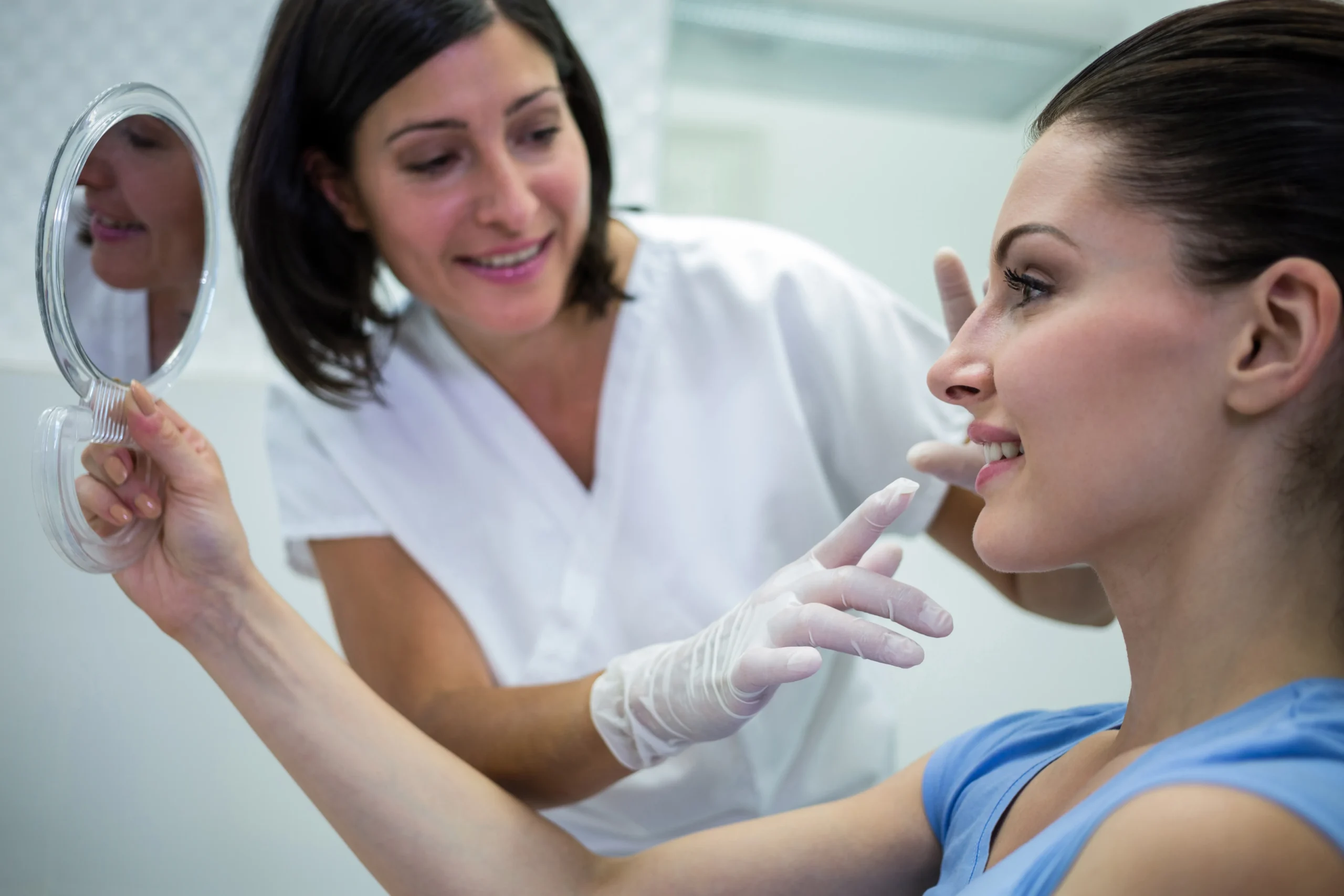
Each ear is unique in its position, anatomy, and type of issue. Before discussing any surgical strategy, Dr. Robinson starts with a comprehensive, unhurried conversation. He'll review your medical history, carefully examine the shape and position of each ear, and note any asymmetry. Photographs are typically taken at this stage to aid in planning.

From there, he'll walk you through the recommended approach for your specific anatomy and goals, setting clear, honest expectations about what the procedure can achieve, what recovery looks like, and how the result will integrate with your overall facial proportions.

Children (5+)

Performed once the ears have matured to full size — usually around age 5 or 6. General anesthesia keeps the youngest patients comfortable and safe throughout.

Teens & Adults

Older patients receive a local anesthetic with a mild sedative — a comfortable, straightforward outpatient procedure with a short recovery.

  • Comprehensive, unhurried consultation conversation
  • Medical history review and careful examination of each ear
  • Planning photographs and assessment of any asymmetry
  • May recommend treating both ears for the most balanced result
  • Clear, honest expectations rooted in your individual anatomy
02Surgical Technique

Surgical Techniques to Achieve Your Desired Outcome

Ear surgery typically requires one to two hours and can be performed at Robinson Facial Plastic Surgery or Pacific Hills Surgery Center, with anesthesia chosen to ensure comfort and safety at every age.

1

Anesthesia & Setting

A local anesthetic with a mild sedative is used for older patients and teenagers; general anesthesia is used for younger children. The procedure typically takes one to two hours.

2

Concealed Incision

Surgery begins with a carefully placed incision in the natural crease where the back of the ear meets the head — a location that keeps any resulting scar well-concealed once healed.

3

Cartilage Sculpting & Repositioning

Through this incision, Dr. Robinson accesses the cartilage framework directly. Depending on your concern, he sculpts, removes, or repositions cartilage to bring the ear to its desired angle and contour, securing it with sutures that hold everything precisely in place during healing.

4

Earlobe & Reconstructive Refinement

For torn or elongated earlobes, or those requiring reconstructive work, additional targeted techniques restore the natural form of the ear — every step guided by an eye for proportion.

03Recovery

Recuperating After Your Ear Surgery

At the close of surgery, Dr. Robinson applies a soft protective wrap over the treated ear or ears — shielding the surgical site and maintaining the corrected position during early healing. Most patients wear this wrap for about one to two weeks, and some are advised to use a supportive headband at night for added protection.

Soft Protective WrapWorn for about 1–2 weeks to protect and hold the ears in position.
Nighttime HeadbandSome patients use a supportive headband at night for added protection.
Avoid Pressure on EarsDon't rest on or press the ears for about a week while healing progresses.
Pain ReliefTenderness in the first day or two is easily managed with recommended relief.
First 1–2 Days

Tenderness and mild swelling around the ears and sides of the face are normal and straightforwardly managed with recommended pain relief.

Day 4–5

Most patients return to their normal daily schedule, with the all-clear for moderate activity coming shortly after.

~1 Week

Healing has typically progressed enough to rest on the ears or apply gentle pressure to the area.

Week 1–2

Soft protective wrap is worn for one to two weeks, with scheduled check-ins to track your progress.

Several Weeks+

Strenuous exercise and contact sports can resume, allowing complete healing without disruption.

04Results

Expected Results from This Procedure

The transformation becomes apparent almost immediately once the protective dressing is removed. What patients notice first is not just the changed position of the ears, but the way the face reads as a whole — more balanced, more proportionate, and no longer dominated by a single feature. Because incisions are placed in natural, concealed folds, visible scarring is minimal and continues to fade in the following weeks.

  • Transformation apparent once the dressing is removed
  • A more balanced, proportionate overall facial appearance
  • Minimal scarring in concealed folds that continues to fade
  • No effect on hearing — only the outer ear's form and position
  • Permanent, long-lasting results
  • Measurable gains in confidence and social ease, especially for children
1–2 Hours
Typical procedure duration
4–5 Days
Return to your normal daily schedule
Permanent
Long-lasting results once fully healed

Ready to Take the Next Step?

Contact Robinson Facial Plastic Surgery in Aliso Viejo to request a consultation with Dr. Robinson.

This website does not contain medical advice and the use of this website does not create a physician/patient relationship between you and Robinson Facial Plastic Surgery. The photographs of models displayed on this website are for decorative purposes only. See before & after photos for possible results.